
Freeze-dried food – from scientific innovation to everyday meals
Freeze-drying, also known as lyophilisation, is a technique that preserves food in a way that extends its shelf life while retaining flavour, nutrients and texture. The method was developed during the 20th century for scientific and medical purposes, but has since become firmly established in the food industry – particularly for products such as coffee, fruit, berries and ready meals.
How freeze-drying works
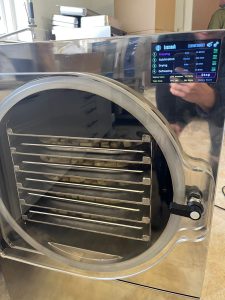 The process begins by freezing the food to very low temperatures. A vacuum is then created, causing the water in the food to pass directly from ice to vapour without becoming liquid – a process called sublimation. This removes 95–99% of the water in the product. The result is a very light, dry, shelf-stable food that readily regains its original form and flavour when liquid is added.
The benefits are numerous: the food is extremely light to transport, has a long shelf life without preservatives, and retains most nutrients and flavours better than traditional drying or canning.
The history of freeze-dried food
Although the modern technique was developed during the 20th century, people have been trying to preserve food by freezing and drying it for thousands of years. High in the Andes in South America, the Incas used nature’s own freeze-drying process: potatoes and other crops were placed at high altitude, where they froze at night and dried in the thin, dry air during the day. The result was called chuño and can be seen as a forerunner of today’s industrial process.
The first modern applications of freeze-drying were in medicine and research. During the Second World War, the technique was used to preserve blood plasma and penicillin. In the 1950s and 1960s, the same method began to be applied to food, particularly to provide astronauts with nutritious, lightweight, long-lasting meals during space missions. This famous “space food” laid the foundations for the freeze-dried meals we know today.
Freeze-dried food today
Today, freeze-dried food has evolved from an advanced research product into a practical part of everyday life for many people. It is used in:
-
Outdoor activities and adventures – hikers, climbers and adventurers choose freeze-dried meals because they are light to carry and easy to prepare with just hot water.
-
Emergency preparedness – more and more households include freeze-dried products in their emergency supplies. Their long shelf life and compact storage provide reassurance if food supplies are disrupted.
-
The food industry – freeze-dried berries, fruit and coffee are used as ingredients in everything from muesli and baked goods to snacks.
-
Restaurants and gourmet cooking – the technique is also used in modern kitchens, where chefs experiment with freeze-dried ingredients to create new flavours and textures.
- The public sector – organisations including SKR and MSB have called for municipalities, regions and other public bodies to take greater responsibility for strengthening emergency preparedness and ensuring food supplies during a crisis.
The future of freeze-drying
With growing interest in sustainability, food security and emergency preparedness, freeze-dried food is expected to play an even greater role in the years ahead. The technology is continually being developed to improve energy efficiency, while more foods are being tested and adapted for freeze-drying. The combination of long shelf life, low weight and retained quality means that freeze-drying is likely to be one of the key methods for supplying food in the future – particularly as we look towards long-distance space travel and new challenges here on Earth.
At Norrsmak, we want to make straightforward, flavourful freeze-dried food using Swedish ingredients wherever possible, with no additives. We hope you will join us on our journey – why not buy a portion and give it a try? As well as enjoying a tasty meal with a long shelf life, you will be supporting two small business owners in rural Sweden.
Join us on our freeze-dried food journey!